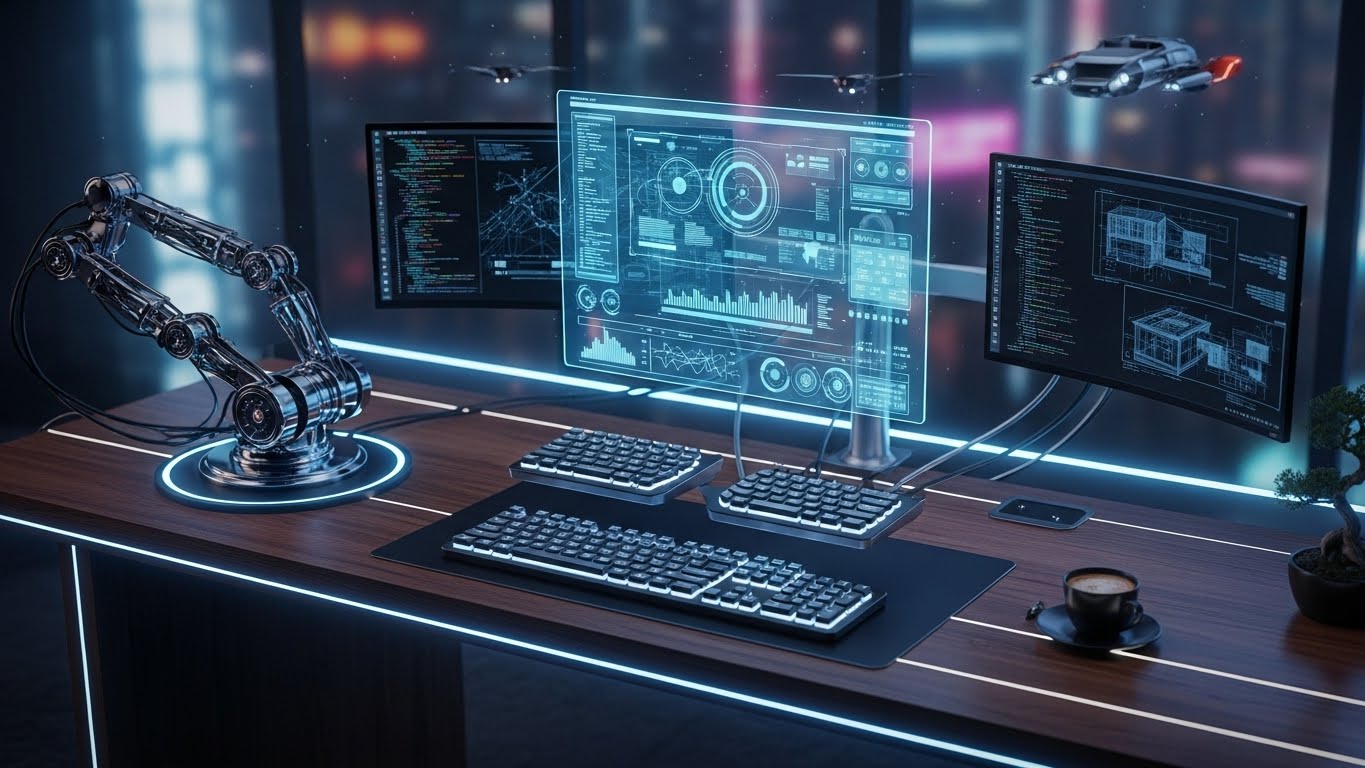

Technology has always been at the heart of human progress. From the discovery of fire to the advent of the internet, each breakthrough has reshaped the way we live, work, and interact. Today, we find ourselves on the cusp of another technological revolution that promises to change everything we know about the world. The pace of innovation is accelerating at an unprecedented rate, with developments in artificial intelligence, quantum computing, biotechnology, and more. In this blog, we’ll explore how technology is evolving, the impact it’s having on various industries, and what the future might hold.
The Era of Artificial Intelligence: Redefining Human Potential
One of the most significant technological advancements in recent years is the rise of artificial intelligence (AI). What was once the stuff of science fiction is now a tangible force reshaping industries, governments, and societies. AI is revolutionizing everything from healthcare and education to finance and entertainment, and it’s only just getting started.
AI in Healthcare: Revolutionizing Diagnosis and Treatment
In the healthcare industry, AI is enabling doctors to diagnose diseases more accurately and at earlier stages than ever before. Machine learning algorithms can analyze medical images, such as X-rays and MRIs, with precision comparable to that of human experts. Moreover, AI is being used to develop personalized treatment plans, predicting how patients will respond to different medications based on their genetic makeup.
One of the most exciting developments is the use of AI in drug discovery. AI-powered systems are able to analyze vast datasets of biological information to identify potential new drugs more efficiently than traditional methods. This could lead to breakthroughs in the treatment of diseases that currently have no cure, such as Alzheimer’s and cancer.
AI in Business: Optimizing Operations and Customer Experience
In the business world, AI is transforming everything from supply chain management to customer service. Predictive analytics are helping companies anticipate customer demands and streamline production processes. Chatbots and virtual assistants powered by AI are enhancing customer service by providing instant, round-the-clock support.
Moreover, AI is being used to personalize marketing strategies. By analyzing vast amounts of consumer data, AI can help businesses create targeted advertisements and recommendations that resonate with individual customers. This level of personalization is driving sales and enhancing customer loyalty.
Quantum Computing: The Next Frontier in Computing Power
While AI may be the most talked-about technology today, another breakthrough is quietly making waves in the world of computing: quantum computing. Quantum computers harness the principles of quantum mechanics to process information in ways that classical computers cannot. These machines can solve complex problems in a fraction of the time it would take a traditional computer, offering the potential for massive advancements in fields like cryptography, logistics, and materials science.
The Power of Quantum Computing
The promise of quantum computing lies in its ability to perform calculations that are currently impossible for classical computers. For example, quantum computers could revolutionize cryptography by breaking encryption algorithms that are currently considered unbreakable. On the flip side, they could also enable the creation of much stronger encryption methods, making data more secure than ever before.
In addition to cryptography, quantum computing could transform fields like medicine and chemistry by simulating molecular interactions at a level of detail that classical computers cannot achieve. This could lead to the development of new materials, more effective drugs, and a deeper understanding of biological processes.
Challenges and the Road Ahead
While the potential of quantum computing is immense, the technology is still in its infancy. Building a functional, large-scale quantum computer is a monumental challenge, as it requires controlling quantum bits (qubits) that are highly sensitive to their environment. However, researchers are making significant progress, and many companies, including IBM and Google, are investing heavily in quantum computing research.
Biotechnology and Genetic Engineering: The Intersection of Technology and Life
Biotechnology is another field where technological advancements are having a profound impact. From gene editing to personalized medicine, the intersection of technology and biology is opening up new possibilities for improving human health and well-being.
CRISPR and Gene Editing: A New Era in Medicine
One of the most groundbreaking innovations in biotechnology is CRISPR-Cas9, a gene-editing technology that allows scientists to modify DNA with unprecedented precision. This technology has the potential to cure genetic diseases, such as cystic fibrosis and sickle cell anemia, by directly altering the genetic code that causes these conditions.
While CRISPR holds incredible promise, it also raises ethical questions. The ability to edit the human genome opens the door to “designer babies,” where genetic modifications could be made to enhance physical traits or intelligence. There are also concerns about unintended consequences, such as off-target effects that could lead to unforeseen health problems.
Personalized Medicine: Tailoring Treatment to the Individual
In the realm of healthcare, biotechnology is driving the shift towards personalized medicine. By analyzing an individual’s genetic makeup, doctors can now prescribe treatments that are tailored to their specific needs, increasing the likelihood of success and minimizing side effects. This personalized approach is especially important in the treatment of cancer, where traditional treatments like chemotherapy can be ineffective or damaging.
Advancements in biotechnology are also improving the development of vaccines and therapies for infectious diseases. The rapid development of COVID-19 vaccines, powered by mRNA technology, is a prime example of how biotechnology can respond to global health challenges.
The Internet of Things (IoT): Connecting the World Like Never Before
Another transformative technology that is reshaping our lives is the Internet of Things (IoT). IoT refers to the network of physical objects that are embedded with sensors, software, and other technologies to connect and exchange data over the internet. From smart homes to industrial automation, IoT is changing the way we interact with the world around us.
Smart Homes: Automation at Your Fingertips
Smart home technology is perhaps the most visible example of IoT in everyday life. Devices like smart thermostats, voice-controlled assistants, and security cameras are connected to the internet, allowing users to control and monitor them remotely. These devices can learn from user behavior, adjusting settings for energy efficiency or personal comfort. For example, a smart thermostat can learn your schedule and adjust the temperature accordingly, saving energy and reducing costs.
Moreover, IoT devices can enhance home security by providing real-time alerts and enabling remote monitoring. Cameras, doorbell systems, and motion sensors can all be linked together, providing a comprehensive security system that is more effective and user-friendly than traditional setups.
Industrial IoT: Optimizing Efficiency and Safety
In the industrial sector, IoT is helping businesses optimize operations and improve safety. Sensors embedded in machinery can monitor performance in real-time, predicting maintenance needs before equipment breaks down. This predictive maintenance reduces downtime and extends the lifespan of expensive equipment.
IoT is also playing a key role in supply chain management. Sensors can track inventory levels, monitor the condition of goods in transit, and provide real-time data on the status of shipments. This helps businesses streamline operations, reduce waste, and ensure that products reach consumers in the most efficient way possible.
The Future of Technology: What Lies Ahead?
The rapid advancements in technology are only going to continue. As AI, quantum computing, biotechnology, and IoT evolve, new innovations will emerge that we can’t even predict today. However, with these advancements come new challenges, particularly in terms of privacy, security, and ethics.
The Ethics of Technological Advancement
As technology becomes more integrated into our lives, ethical considerations become increasingly important. The development of AI, for example, raises questions about job displacement, as machines may replace human workers in certain sectors. There are also concerns about privacy, as IoT devices collect vast amounts of personal data.
Furthermore, the potential for gene editing and biotechnology to alter the course of human evolution raises important ethical questions. How do we balance the desire for progress with the need to preserve human dignity and equity?
Embracing the Future
Despite the challenges, there is no denying that technology will continue to drive progress. By embracing new innovations responsibly and ethically, we can ensure that these advancements are used to improve our quality of life, enhance our understanding of the world, and solve some of humanity’s most pressing problems.
As we move forward into this new technological era, one thing is clear: the future is incredibly exciting. With the right approach, technology will continue to empower individuals, transform industries, and shape the future of humanity in ways we can only begin to imagine.
Conclusion: The Limitless Potential of Technology
The pace of technological progress has never been faster. From AI and quantum computing to biotechnology and IoT, the innovations of today are laying the foundation for a future that once seemed like science fiction. While challenges exist, the potential for positive change is limitless. By harnessing the power of these technologies and applying them in ways that benefit society, we can usher in a new era of human progress that will change the world for the better.
As we continue to explore and expand the boundaries of what is possible, the technological renaissance we are experiencing today will be remembered as one of the most transformative periods in human history. The journey has only just begun.